Corn Potter
Unreal
Blueprints
Game Design
Blender
Design Goals
A Small Daily Prototype
Between my first and second year of university, I went through a period of burnout and found it difficult to start new projects. To challenge myself, I built a small prototype every day for a week. After making five prototypes, I chose to take one further and gave myself five days to see where it could go.
Plant, Grow, Harvest, Sell
The original scope was deliberately small: plant a crop, grow it, harvest it, and sell it. That simple loop became the foundation for a more complete progression experience while remaining achievable within the short development window.
Technical Achievements
Incremental Upgrades
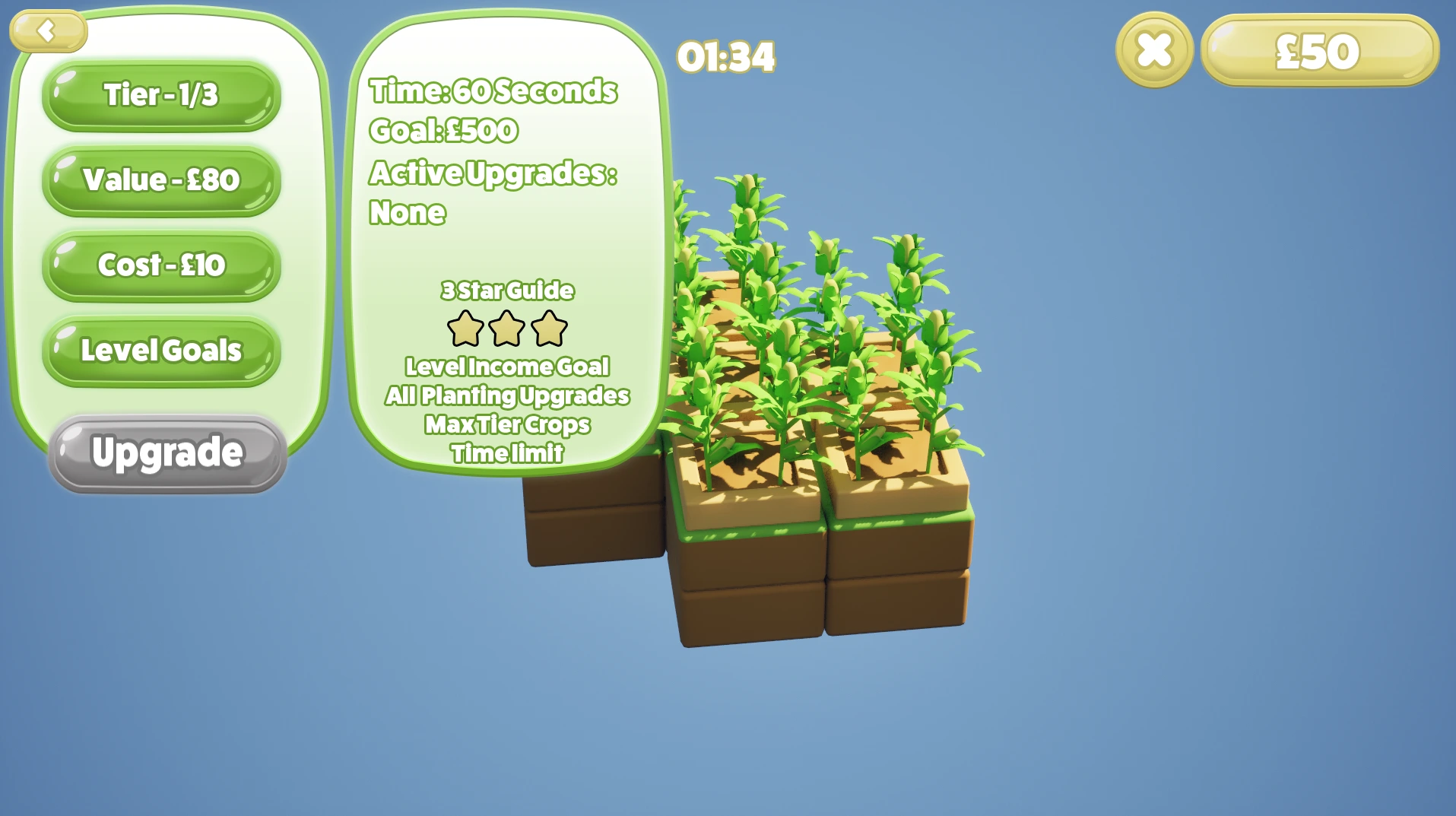
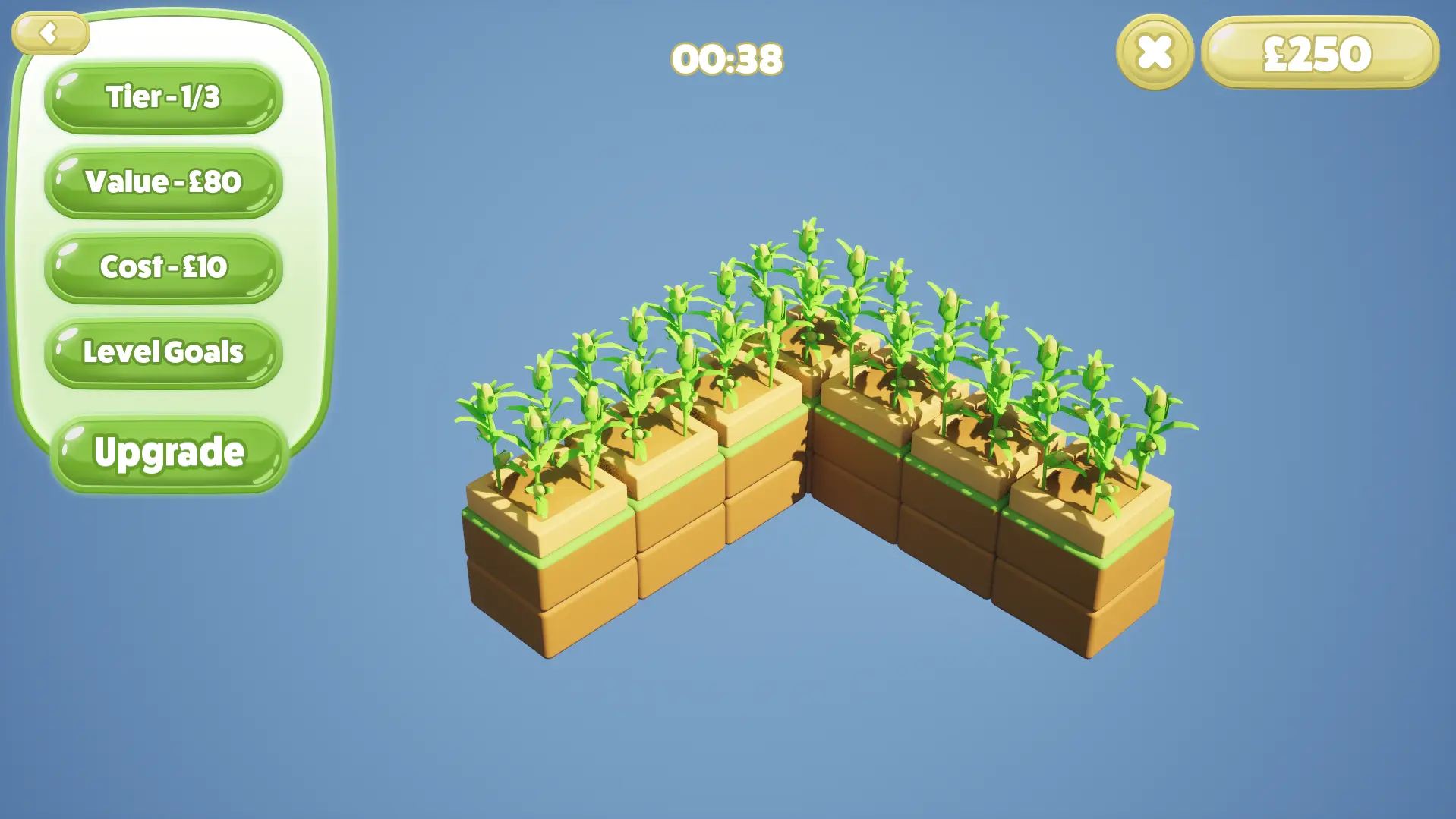
I implemented progression abilities that improved the farming loop over time, including automatic planting, automatic harvesting, and faster crop growth. These upgrades gave the player a reason to keep investing in the farm instead of repeating the starting loop unchanged.
Build Mode And Saving
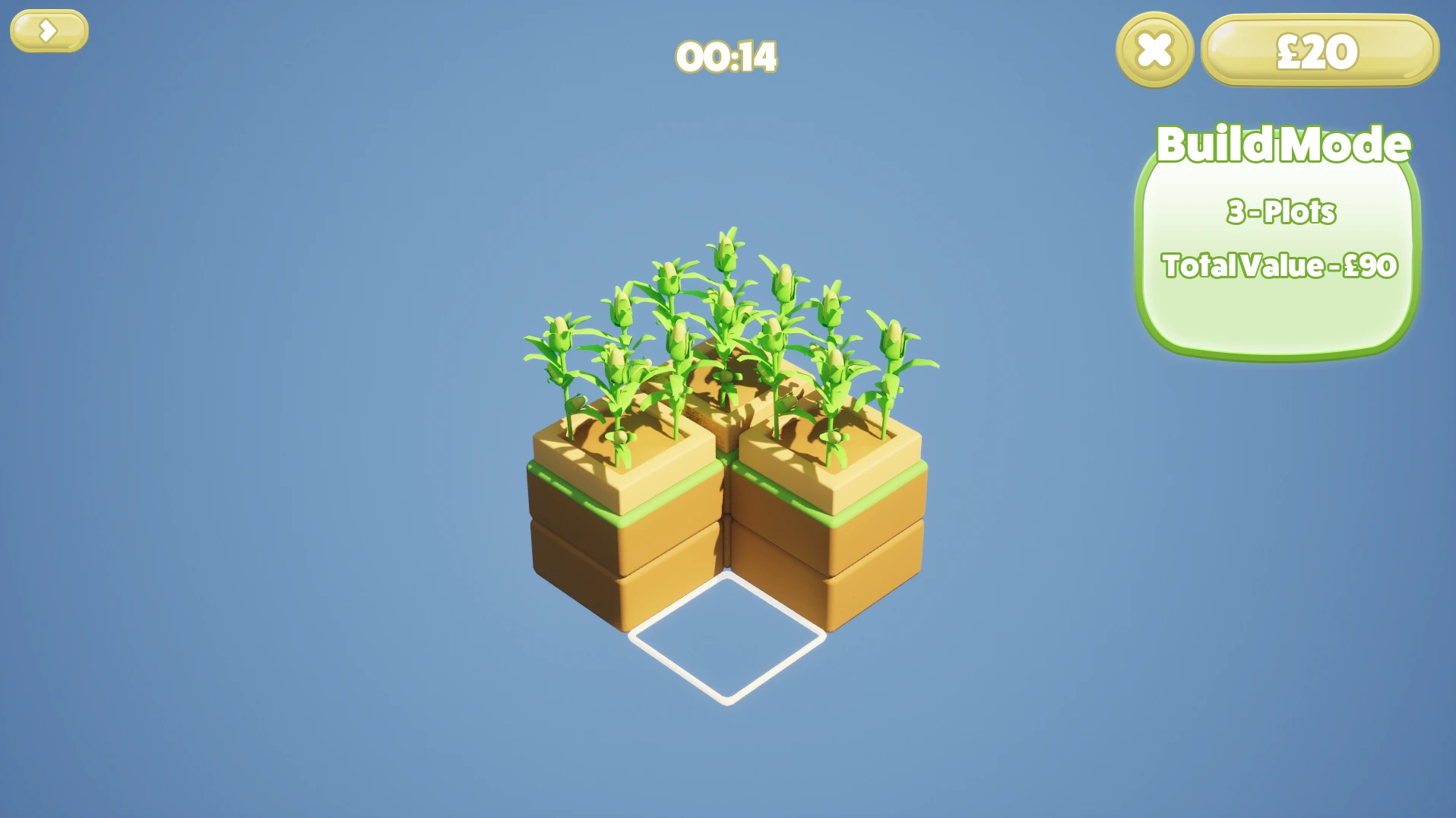
A build-mode toggle allowed the player to create new planters and expand the farm. I also added a save system so progress and upgrades could carry between sessions.
Replayable Progression
Increasing Targets
The progression system increased the sell targets for each level, giving the game replayable value and encouraging the player to use new upgrades more efficiently.
Three-Star Level Goals
Completing a level was not enough to unlock the next one. Players had to earn three stars by meeting goals such as earning a specific amount within a time limit, finishing with particular upgrades, or growing crops to a required level.
What I Took Forward
Corn Potter pushed me to implement replayable systems quickly while keeping the scope under control. It was a useful exercise in deciding which features could add depth to a small game without overwhelming its central loop.